Incomplete semantic coverage
Important informational and commercial queries had no dedicated, strong pages of their own: installation, price per m², ceiling types, lighting, fixtures and profiles.
Case · SEO · WordPress · Lead generation
How we refreshed SteliPro's content, created new entry points from search, put technical SEO in order and made lead delivery resilient to email and third-party failures.
01 · How it started
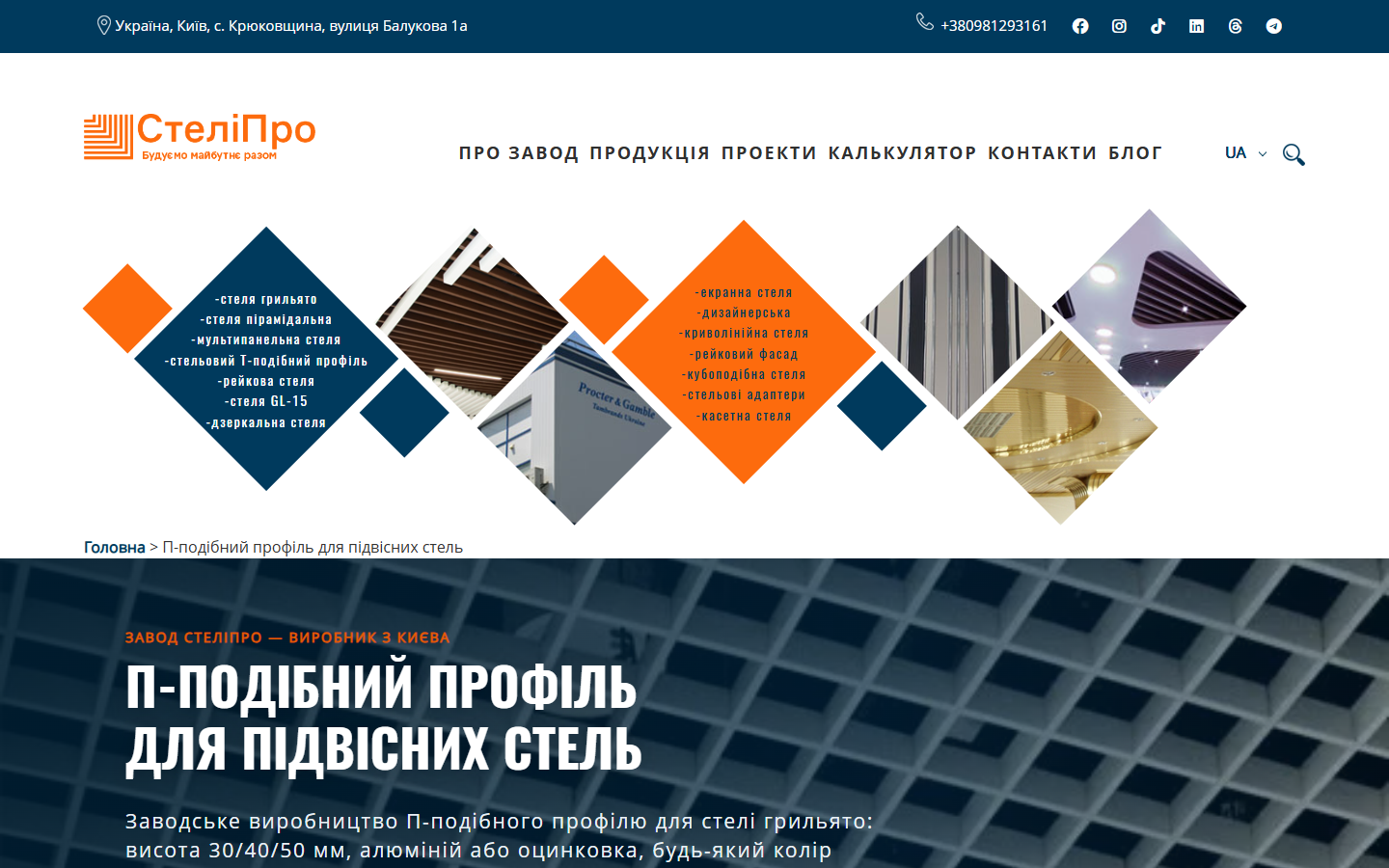
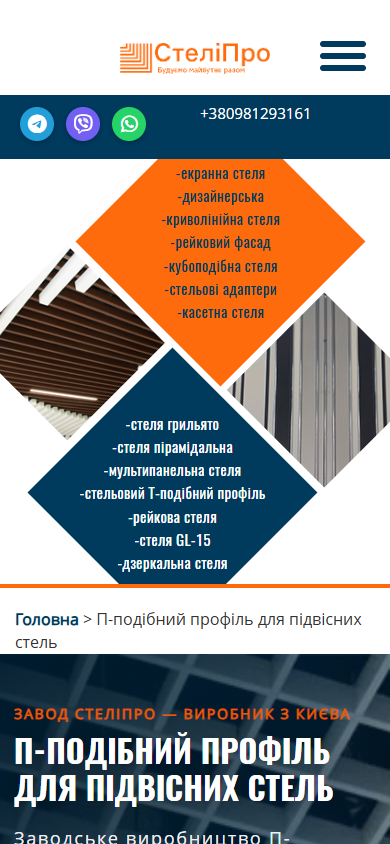
SteliPro manufactures metal suspended ceilings and facade systems. The problem wasn't the product — it was how the website presented it.
Important informational and commercial queries had no dedicated, strong pages of their own: installation, price per m², ceiling types, lighting, fixtures and profiles.
Some product pages had a weak structure, incomplete specifications, bland headings and few answers to questions about choosing a system.
The form stored submissions locally, but email delivery relied on PHP mail(), and the CRM only fired after an email was sent successfully.
A custom theme, an ACF builder, multilingual setup, server-side caching and a large number of plugins called for careful changes and a check on every release.
02 · Scope of work
We didn't treat copy, technical SEO and forms as separate tasks. Each element had to guide the user from a query to a safely stored lead.
Mapped pages to search intent, spotted gaps and set priorities.
Rewrote 10 key pages and separately reimagined the Armstrong page.
Built 7 pages that cover installation, pricing and informational queries.
Moved the new material into Gutenberg so the team can change text and images without code.
Checked headings, schema, images, tables, assets, desktop and mobile.
Set up authenticated SMTP, backup queues and independent lead delivery to the CRM.
03 · New entry points
Each page got its own intent, a clear H1, practical tables, an FAQ, calls to action, curated images and structured data.
04 · Rewrite and design
Instead of generic descriptions — arguments for the architect, the contractor and the client: materials, formats, installation, use cases, real projects and answers to objections.
10 pages + Armstrong
05 · Editing without a developer
The content isn't buried in a monolithic template. An editor can change headings, paragraphs, images, buttons, FAQs and tables in Gutenberg.
Text and structure checked against the source material.
Every element moved into a valid, editable block.
Titles, descriptions, H1s, schema and links aligned.
Each page checked on desktop and mobile before sign-off.
06 · Quality control
Automated audits were backed up by manual visual review. That matters especially for long technical pages with tables and galleries.
All new pages open without server errors.
One main heading per page.
Every embedded visual loads.
Paragraphs, FAQs, tables and alt text checked against the sources.
No horizontal content spilling off-screen.
Product/Service, FAQPage and BreadcrumbList where they fit.
07 · Hosting and security
Content work made no sense without stable hosting. So we separately reviewed infected files, account limits and the risks of an outdated stack.
Suspicious web scripts were removed from the account's temporary area, after which a repeat antivirus scan of the hosting came back clean.
An outdated staging copy was deleted. That freed up about 49,000 inodes and again allowed updates and security tools to be installed.
Rotating access credentials, updating WordPress, plugins and PHP, removing unused components and running periodic control scans.
The exact initial intrusion vector wasn't proven by the logs, so in this case study we don't attribute the incident to a specific plugin or user. The outdated stack is recorded as a risk, not as an established fact of a breach.
08 · Leads with no single point of failure
After an incident with undelivered emails, we rebuilt the chain so that a valid lead is stored and passed along through several channels.
Contact Form 7 accepts and validates the submission.
Flamingo stores the lead in WordPress regardless of email.
Authenticated email and SalesDrive run as independent routes.
Failed delivery goes into a retry queue; messengers are available.
Five active forms are now protected against an SMTP failure or a temporary block on outbound connections. Telegram, Viber and WhatsApp were added to the pages as an emergency channel, and failed submissions go into a local retry queue.
09 · Result
Content captures demand, pages help compare solutions, WordPress stays editable, and the infrastructure gets the lead through to the sales team.
The new landing pages cover queries that weren't in the structure before.
The rewrites combined SEO, technical specifics, case studies and conversion elements.
The new pages can be changed in WP without rewriting the template.
A lead has a local copy, SMTP, CRM, retries and messengers.
We deliberately don't credit this case with unconfirmed ranking or organic-traffic growth. The search impact of the new and rewritten pages is best measured after indexing and a sufficient observation period in Google Search Console.
SteliPro · completed stage
The new pages, rewritten content and forms are already integrated into the live WordPress project.