

18 years of link building: how the methods — and our results — evolved
The best way to understand what works today is to see what stopped working yesterday. This is not theory: we lived through every stage below on our own and client projects.
2008–2014. The era of directories and marketplaces. Links were "mined" in bulk: directories, marketplaces, rented links. It worked — until Google Penguin (2012) started purging artificial profiles. Sites built on purchased links lost their traffic overnight.
2017. Manual outreach — honest, but expensive. For his own project, Anatolii published 257 guest posts across 80 domains in 1.5 years (case in Russian): 230 dofollow links, a team of 3 outreach specialists, 2 editors, 3 SEOs, and 30+ copywriters. Traffic grew — but the cost per link was high. The lesson was clear: we needed leverage.
2019. Scholarship: the first lever. Instead of hundreds of emails — one student scholarship program (case in Russian): 160 donor domains in 4 months, including 48 government and 31 university sites, 9,634 links. Project traffic grew 5.5x — from 4,698 to 26,045 users. Same team, a fraction of the manual work.
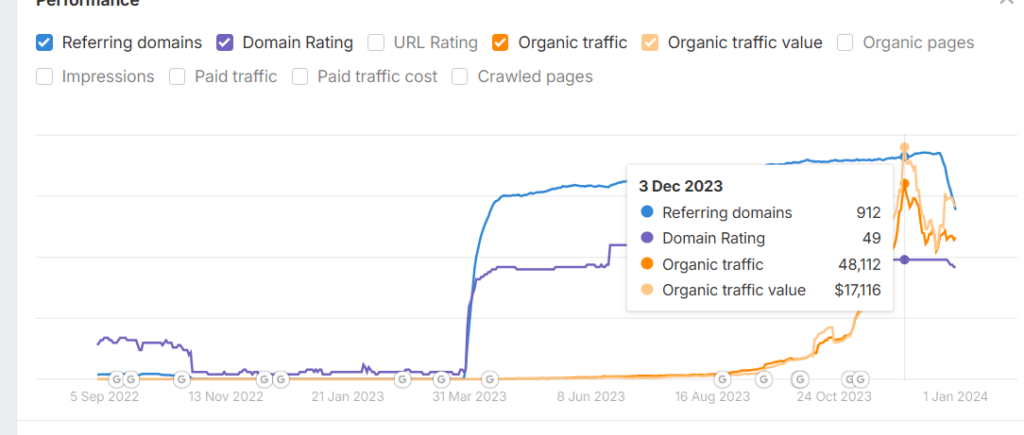
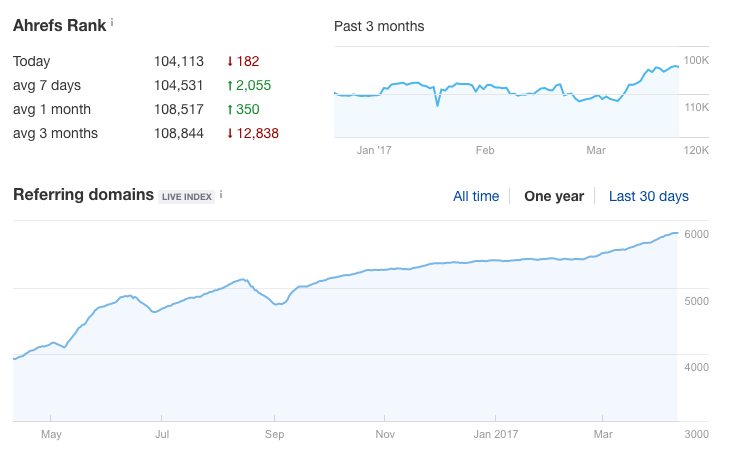
2021–2024. Tool magnets. In our finance site case study, a free currency converter generated 50,000+ pages and helped grow the profile to 912 referring domains (DR 49). On a US content project, systematic white-hat link building grew the profile from ~4,000 to 6,000+ domains in a year. Links started "coming on their own" — to useful assets.
2025–2026. The AI search era. The same links and mentions got a second job: they determine who gets cited by AI Overviews, ChatGPT, and Perplexity. Authority became a double currency.
AI search: your links' second job
The classic logic: links → authority → rankings → clicks. But search has shifted: users increasingly get the answer without leaving the SERP or the chat.
LLMs don't compute PageRank, but they answer based on sources "the internet trusts": those referenced by media, industry sites, and experts. The stronger your link profile and brand mentions, the higher the odds of becoming the answer's source.
Black hat vs white hat: the score is 0:5
"Black-hat" methods try to buy authority around the rules. Google's link spam policies explicitly forbid them, and the SpamBrain algorithm devalues such links automatically.
⛔️ Black-hat methods
- ✗Link marketplaces — rented and "permanent" links from networks. Zeroed out by SpamBrain; manual actions in the worst case.
- ✗PBN networks — templated sites with no audience. One deindex and the whole profile burns down.
- ✗Bulk submissions — thousands of directories and profiles in a day. The classic spam pattern.
- ✗Comment spam — nofollow/ugc, zero value, minus reputation.
- ✗Link rings and swaps — the schemes are visible in the link graph.
✅ White-hat methods
- ✓Link-worthy content — statistics, research, free tools. People link voluntarily.
- ✓Personalized outreach — guest posts, broken links, refreshing outdated content.
- ✓Personal connections — communities, podcasts, partnerships, conferences.
- ✓Digital PR — research for the press, expert commentary, scholarships.
- ✓Basic hygiene — GBP, vetted directories, review platforms.
SERP leaders have radically stronger link authority: per Backlinko, position #1 takes 27.6% of clicks — and it goes to pages with several times more quality links than positions 2–10.
Not sure your link profile is clean?
Run a free audit: we'll find toxic links and the first growth levers.
Link-worthy content: assets people link to on their own
In recent years, 90% of our links came to three asset types: data, tools, and foundational content.
Original statistics and research
Journalists need numbers. Survey your audience, analyze your own data or open datasets — and you have an asset that gets cited for years. Per Backlinko (analysis of 912M posts), data-driven content earns disproportionately more links than "opinions".
Free tools
A tool is a "perpetual" magnet: one build keeps earning links and traffic non-stop. In our case study, a currency converter not only produced 50,000 traffic pages but also attracted hundreds of natural links — people cited it as a data source. Today, building such tools with AI costs a fraction of what it did in 2021.
Foundational guides and infographics
In-depth materials (2,500+ words, structure, tables, examples) become the primary source for shallower articles. Infographics get embedded in other posts with a link to the author — the "quietest" link source there is.
Outreach: direct agreements without spam
Outreach means personal emails to site owners and editors. The lesson of our 257 guest posts: only personalization and real value for the recipient work. Templated blasts simply don't get opened in 2026.
Three working plays
- Guest posts. An expert article for a niche blog with a live audience — in exchange for 1–2 links. Avoid sites publishing anything for money: that's a marketplace in disguise.
- Broken links. Find links to dead pages (404) on trusted sites and offer your fresh material as a replacement.
- Refreshing outdated content. An article with 2019 data? Offer the editor fresh numbers with a link to your primary source.
An email that gets opened
Hi Irene,
I read your breakdown of GA4 funnels — the cohort section was especially useful (we applied it on a project last week).
I noticed that in the attribution section the research link returns a 404. We have a fresh piece with up-to-date 2026 data on the same topic: [URL]. If it fits as a replacement — great. If not, I just wanted to flag the broken link.
— Anatolii, SEOquick
A typical manual outreach funnel in our experience: out of 100 relevant sites, 25–40 reply and 8–15 agree. That's why outreach is paired with the assets from Method 1 — conversion is noticeably higher when you offer data and tools rather than "just an article".
Personal connections and Digital PR
Links from people who know you are the most natural and the cheapest. This channel can't be scaled by bots — which is exactly why it works.
- Professional communities. Industry chats, LinkedIn groups, private communities. One rule: help first — the citations come later.
- Podcasts and interviews. A guest appearance = a link from the episode notes + a brand mention "heard" by both people and language models.
- Partnerships. Joint research and webinars with non-competing companies in your niche: each side brings its audience and its links.
- Expert commentary for the press. Journalist-expert platforms (Qwoted, Featured, Help a B2B Writer — successors of the discontinued HARO) earn mentions in major publications for a quality comment. Our experience — in the Digital PR case study.
- Social programs. Scholarships are the brightest example: 160 domains (48 gov + 31 edu) in 4 months and 5.5x traffic growth. Full breakdown — in the case study (in Russian).
Every link building method — in brief
A summary list of 18 methods: what each is and when to use it. Difficulty: EASY / MEDIUM / HARD.
Research & statisticsHard
Original data, surveys, dataset analysis. The most-cited assets — by people and AI alike.
Free toolsHard
Calculators, converters, checkers. A "perpetual" link magnet; AI has slashed the build cost.
Guest postsMedium
Expert articles for niche sites with a live audience. The backbone of manual outreach.
Broken link buildingMedium
Finding 404 links on trusted sites and offering your replacement. A win-win with the editor.
Refreshing outdated contentEasy
Offering fresh data for articles with stale numbers — linked to your primary source.
SkyscraperMedium
Find a piece with hundreds of links, make something far better — and show it to everyone who linked to the original.
Unlinked mentionsEasy
Find brand mentions without a link and politely ask to add one. The highest conversion of all.
Expert commentaryEasy
Qwoted, Featured, Help a B2B Writer: an expert comment → a mention in a major publication.
Scholarship programsHard
Social programs for students → links from gov/edu domains. Our case: 160 domains in 4 months.
NewsjackingMedium
A fast expert reaction to industry news: journalists look for commentators in the first hours.
Podcasts & interviewsEasy
A guest spot = a link from the notes + a brand mention that LLMs index.
Crowd marketingEasy
Helpful answers on forums, Reddit, Quora — a link only where it adds to the answer. Guide.
Local directories + GBPEasy
Google Business Profile and vetted regional directories. Local SEO hygiene.


Review platformsEasy
Clutch, GoodFirms, Trustpilot: a link + social proof for B2B and services.
Partnerships & co-marketingMedium
Joint research and webinars with niche non-competitors — exchanging audiences and links.
Video & YouTubeMedium
Video descriptions, mentions in reviews, embeds in other articles. Our service.
Content translationMedium
Localizing your research into other languages — links from new GEOs for the same asset.
Ego bait & rankingsEasy
"Top 20 experts/services" lists: those mentioned gladly share and link back.
Checklist: 5 donor checks before you start
- Live search traffic. The site has real Google visitors (check via Ahrefs/Serpstat) — not a "painted" DR.
- Topical relevance. A relevant link is worth several random ones; the donor's topic must overlap with yours.
- A clean link history. The site isn't plastered with casino "sponsored" posts and doesn't sell links to anyone.
- Authority as a guide. DR 20–50 is the working range for manual outreach; but traffic and relevance beat the number.
- A link in context. From the body of a useful piece — not from a footer, sidebar, or a "wall of links".
What to do in 2026
- Don't buy links. Black-hat methods switch your site off in two channels at once: Google's SERP and AI answers.
- Build assets. Statistics, research, and free tools earn links for years — we've proven it in our own case studies.
- Pair outreach with assets. Personal emails work several times better when you offer data, not "just an article".
- Invest in connections and PR. Podcasts, communities, expert commentary, and scholarships earn the most trusted links.
- Think citability. Every link and mention now also works for AI search — double the return on the same work.
Data sources
- Google — link spam policies and SpamBrain: spam policies.
- Ahrefs — 96.55% of pages get no Google traffic: search traffic study.
- Backlinko — CTR by position (4M SERPs): google-ctr-stats; content and links (912M posts): content study.
- BrightEdge — organic search drives ~53% of site traffic: channel report.
- SE Ranking — AI Overviews and AI traffic dynamics: AI traffic research.
- Superlines — zero-click and AI search statistics: AI search statistics.
- Increv — link profiles of SERP leaders (11.8M SERPs): organic CTR.
Our case numbers (257 guest posts; scholarship: 160 domains, 5.5x growth; 912 referring domains and DR 49; profile growth from 4,000 to 6,000+ domains) are factual data from published SEOquick case studies, linked in the text. The Ahrefs screenshots are real, taken from those cases.